
You can get paid to take care of a family member in most of the country, and the money comes from a program your relative may already qualify for.
What decides it is not how many hours you put in. It is your state, your relative’s coverage, and your relationship.
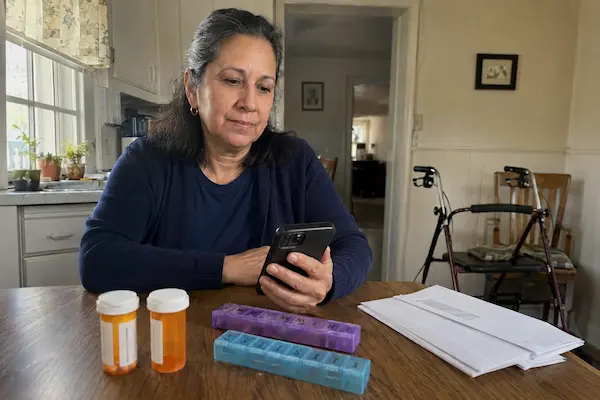
See if you can get paid to take care of a family member, which states pay a spouse, what the programs pay, and how to apply step by step.
In this guide
- Can you get paid to take care of a family member?
- What your state pays and whether a spouse can be paid
- What changes when the care you already give becomes a paid job
- How to get paid to take care of a family member step by step
- Taxes, hours and the federal changes coming to Medicaid
- Frequently asked questions about getting paid to care for a family member
- Why we track programs that pay family caregivers
- Your next step to get paid for the care you already give
Can you get paid to take care of a family member?
Yes. In most states a relative can be hired and paid as the caregiver, as long as the person receiving care qualifies for a program that funds home care and your state allows your relationship. The money comes from their coverage, not from a benefit in your name.
That flips the process. Eligibility belongs to the person you care for. Your job is to become their approved provider.
KFF surveyed state officials in January 2025: 48 of 48 states that responded allow paying family caregivers in some circumstances, 47 of 48 authorize self-directed home care, and 38 let the care recipient set the wage.
The four programs that pay family caregivers
- Medicaid self-directed care. The person receiving care gets employer authority, which Medicaid defines as “the decision-making authority to recruit, hire, train and supervise the individuals who furnish their services”. Each state renames it: CDPAP in New York, IHSS in California, CDS in Texas. See the federal rules on Medicaid self-directed services.
- Structured Family Caregiving. A Medicaid waiver service paying a daily rate instead of an hourly wage, and the caregiver must live in the same home. It runs in about a dozen states.
- VA Comprehensive Assistance for Family Caregivers. A monthly stipend for the caregiver of a veteran with “a VA disability rating (individual or combined) of 70% or higher”. A spouse is allowed, per the VA page on assistance for family caregivers.
- Veteran-Directed Care. The veteran gets a flexible budget and can hire a family member with it, including a spouse.
One correction: Medicare does not pay family caregivers. Medicare covers hospital and doctor visits. Medicaid funds long term care at home and writes these checks.
Find your state’s caregiver program on USA.gov
What your state pays and whether a spouse can be paid
There is no national rule on paying a spouse. New York, Washington, Michigan and Pennsylvania say no in writing. Others allow it in at least one program.
| State | Program | Spouse paid? | Pay range | Source |
|---|---|---|---|---|
| New York | CDPAP | No; adult child’s parent, yes | $19.65 an hour downstate, $18.65 elsewhere | health.ny.gov, dol.ny.gov |
| California | IHSS with Community First Choice | Some program structures only | $16.90 to $23.00 an hour by county | cdss.ca.gov |
| Washington | Individual Provider | No | Not published | dshs.wa.gov |
| Michigan | Home Help | No; adult child’s parent, yes | County rates, unpublished | michigan.gov |
| Indiana | Attendant Care / Structured Family Caregiving | No in the first, yes in the second | Tiered by authorized hours | in.gov, FSSA |
| Ohio | Structured Family Caregiving | Not stated in the rule | $102.68 a day | codes.ohio.gov |
| Missouri | Structured Family Caregiving | Not stated by the state | $110.33 a day | dss.mo.gov |
| Pennsylvania | Community HealthChoices | No | Employer sets it, up to a county cap | pa.gov handbook |
| Texas | Consumer Directed Services | Not addressed | Family sets the wage | hhs.texas.gov |
| Colorado | CDASS | Relatives allowed, with limits | Not published | hcpf.colorado.gov |
The spouse rule is where most applications stop
Michigan tells caseworkers not to pay “a responsible relative (a spouse caring for a spouse or a parent caring for a minor child)”. Indiana bars the spouse under Attendant Care and allows that same spouse under Structured Family Caregiving. California permits a spouse in certain program structures only, so confirm with your county.
What is happening with CDPAP in New York
CDPAP is running. New York moved to a single statewide fiscal intermediary, Public Partnerships LLC, replacing more than 600 previous ones, with the transition starting in January 2025 and over 209,000 consumers registered by that May.
One change matters for new applicants. Since September 1, 2025, people 21 and older applying for personal care, CDPAP or a managed long term care plan must need hands-on help with three activities of daily living, or supervision with two if there is an Alzheimer’s or dementia diagnosis. Existing members were grandfathered.
What changes when the care you already give becomes a paid job
The work is invisible. You drive to appointments, handle medications, cook, bathe, lift, and lose shifts at your own job.
Inside a self-directed program that same week becomes payable hours. A full day of live-in care is worth $102.68 under the Ohio rate, and the New York wage floor upstate is $18.65 an hour. Twenty authorized hours a week is rent money.
It is not automatic. Assessments take weeks, a case manager authorizes the hours, and approval is never guaranteed.
How to get paid to take care of a family member step by step
Start with the coverage of the person you care for.
- Confirm Medicaid. Check whether your relative has it or could qualify. Waivers use tighter income and asset limits than regular coverage.
- Call your state Medicaid office or Area Agency on Aging. Ask the name of the self-directed option and whether it has a waiting list.
- Ask the relationship question first. Say who you are: spouse, adult child, or parent of a minor or adult child.
- Request the assessment. A nurse measures how much daily help your relative needs and authorizes hours or a daily rate.
- Enroll with the fiscal intermediary. This company handles payroll, taxes and timesheets. Some states have one, others let you choose.
- Complete provider registration. Expect a background check, identification, direct deposit and often a short orientation.
- Log every shift. Most programs use electronic visit verification, and unlogged hours go unpaid.
Veterans families use another door: the stipend application is VA Form 10-10CG. If your relative has no coverage yet, start with how to apply for Medicare and Medicaid.
Taxes, hours and the federal changes coming to Medicaid
Caregiver pay is income, and calling it tax free is wrong. Under IRS Notice 2014-7 certain personal care payments count as difficulty of care payments excluded from federal income tax, but only when the caregiver lives in the same home as the person receiving care. It does not cover respite care, training, travel time or paid time off.
The One Big Beautiful Bill Act, Public Law 119-21, signed on July 4, 2025, adds Medicaid work requirements that states implement by January 2027, mostly for the expansion group. It does not end caregiver payment programs. State guidance so far lists a “caregiver of dependent child 13 or under or disabled person” among the exemptions, though an exemption has to be claimed.
Frequently asked questions about getting paid to care for a family member
Can a spouse be paid as a caregiver?
Only in some states and programs. New York, Washington, Michigan and Pennsylvania prohibit it in their main Medicaid home care programs. Indiana allows it under Structured Family Caregiving, and the VA stipend allows a spouse.
How much does Medicaid pay family caregivers per hour?
There is no national rate. New York publishes $18.65 to $19.65 an hour and California $16.90 to $23.00, while Ohio pays $102.68 a day. In many states the family sets the wage inside an approved budget.
Is family caregiver income taxable?
Usually yes, unless the difficulty of care exclusion in IRS Notice 2014-7 applies, and that requires living in the same home. Ask your fiscal intermediary how it reports your pay.
How can I get paid to care for my elderly parent at home?
Through your state’s self-directed Medicaid option, with your parent as the beneficiary and you hired as the provider. Parent of an adult child is a relationship states often allow, including where a spouse is barred.
How much is the VA caregiver stipend?
The VA takes the federal grade 4 step 1 annual rate for the veteran’s locality, divides by 12, then applies 62.5 percent at level one or 100 percent at level two. The Caregiver Support Line has the current figure.
Why we track programs that pay family caregivers
CDIN exists to translate what official pages leave unexplained. Caregiver pay sits inside the wider Medicaid system, and the fastest way to lose months is the wrong door.
Many caregiving families qualify for food, utility and income support at the same time, and applying does not affect a caregiver application. Our guide to government benefits and how to apply lists what to gather.
Your next step to get paid for the care you already give
For most families the answer is yes, on two conditions: the person you care for is enrolled in the program that funds it, and your state allows your relationship. Check both this week.
The official federal page links to every state Medicaid agency and to the veterans programs. Start there, then call your state office with the program name.
Find your state’s caregiver program on USA.gov
CDIN is an independent, advertising-supported content site. We have no relationship with, sponsorship from or control over Medicaid, the Department of Veterans Affairs, any state agency or any private home care company, and we cannot process or approve applications. Rates and rules change, so confirm them with your state Medicaid office.