LIHEAP assistance helps low income families pay their energy bills for free.
If your electric bill keeps going up, you are not alone. Millions feel the same.
Keep reading to see who qualifies, how much you get, and how to apply today.
What is LIHEAP assistance
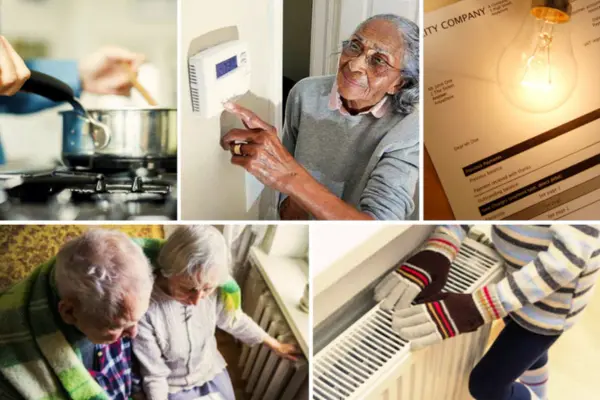
LIHEAP assistance is a federal program that helps families with low income pay for heating and cooling. The name stands for Low Income Home Energy Assistance Program.
The program is run by the U.S. Department of Health and Human Services, the federal health agency. Congress approved more than $4 billion for it this year. That money is divided among all 50 states, the territories and tribal organizations.
Each state receives its share and runs its own version of the program. That is why the name changes from place to place. In some states it is called HEAP, in others it appears as Fuel Assistance, Energy Assistance or Utility Assistance. The rules change a little, but the purpose is always the same.
The help does not come as cash in your hand. In most cases, the program sends the money straight to your utility company, and it shows up as a credit on your bill. If your home runs on propane or heating oil, the program can pay your fuel supplier instead.
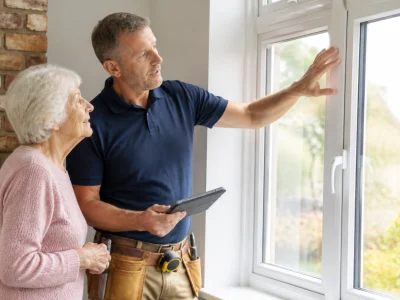
The program also goes beyond the monthly bill. Depending on your state, it can fix or replace a broken heating system, cover urgent repairs, and pay for home improvements that lower your energy use for good. Those improvements are worth thousands of dollars and cost you nothing.
Now that you know what the program is, let’s see if your household fits the rules.
Who can get LIHEAP assistance
You may qualify for LIHEAP assistance if your household income is at or below the limit set by your state. Most states use a limit of 150% of the federal poverty level, which is the income line the government uses to measure need.
There is good news for many families. If someone in your home already receives SNAP (food stamps), SSI or TANF, many states treat your income as already approved. That is called categorical eligibility, and it makes the process much faster.
Some states use a different rule, based on 60% of the state median income. In practice, that number can be higher than the poverty level limit. So even if your income looks a little above the line, it is worth asking your local office before giving up.
Renters can apply too. If your energy costs are included in the rent, bring your lease and the agency will explain how your case works. You also do not need an overdue bill to apply, since the program exists to prevent debt, not only to fix it.
States give priority to households with seniors over 60, people with disabilities and young children. More than 90% of the families served have at least one of these members. About one in five includes a veteran.
How much money you can receive
Most states pay between $200 and $1,000 per season, and a few pay more than that. The final amount depends on your income, the number of people in your home, your type of fuel and the funding your state received.
The regular benefit usually comes once per season. It is not designed to erase the whole bill, and no state promises that. What it does is take real weight off your budget, freeing money for food, rent and medicine.
There is also a second kind of help, called crisis assistance. It is for urgent situations, like a shutoff notice or a fuel tank that is almost empty. Crisis benefits can be paid on top of the regular benefit, and in some states a household can request more than one during the same season.
Speed matters here. Regular applications take weeks, but urgent cases are treated differently, and many agencies review them within 24 to 48 hours. If your power is at risk, say that clearly the moment you contact the agency.
Summer cooling and free AC units
Many people believe this program only works in winter. That is a costly mistake, because a large group of states also runs a cooling program during the hottest months.
Cooling help matters more than ever right now. Average summer electricity spending is close to $800 per household this season, the highest level ever recorded, and cooling costs have climbed almost 40% since 2020. One in six American homes is already behind on utility payments.
States like Arizona, California, Texas, Georgia, Florida, Nevada, New York and South Carolina offer some form of cooling support. In several of them, applications are open right now. Other states have fixed windows that open in the middle of the year and close once the season ends.
The benefit can go further than a credit on the bill. Some states hand out free fans or air conditioning units, and others help repair or replace a cooling system that stopped working. Ask your local agency exactly what your state offers this year.
How to apply for LIHEAP assistance step by step
Applying is free and simpler than most people expect. You apply through a local agency in your area, usually a Community Action Agency, not through a single national website.
1Find your local office
Use the official government search tool or call the free NEAR line at 1-866-674-6327 on weekdays. They tell you exactly where to apply in your area.
2Gather your documents
Separate your ID, proof of income and a recent energy bill. Incomplete applications are the main cause of delays, so check every page twice before sending.
3Send your application
Depending on your state, you can apply online, by phone, by mail or in person. Many states now accept the full application through their own websites.
4Wait for the answer
Most applications are reviewed in about 30 days. Keep paying what you can meanwhile, and answer any call from the agency quickly.
One tip changes everything: apply as early as you can. Almost every state approves families in the order they apply, and the program closes as soon as the season funds run out.
That is not a scare tactic, it is how the math works. The available money has historically covered only about 20% of the households that qualify. Waiting for the hottest or coldest week of the year usually means arriving after the line is already long.
Documents you need ready
The document list is short and simple. Having everything organized before you start is what separates a fast approval from weeks of back and forth.
Bring documents for every person in the household, not only for yourself. Income counts for the whole home, including part time work, unemployment, retirement and disability payments.
If one document is missing, do not give up on the application. The agency can accept other proof or explain what to do in your specific case, and it is always better to ask than to stay out.
Official resources and scam warnings
The real program never charges any fee. It also does not deposit money into your personal account, because the payment goes to the utility company or the fuel supplier.
🚫 Warning: Ignore any text message saying you were selected to receive a benefit. Never pay a fee and never send photos of your documents to strangers.
State agencies have already warned about fake text messages with links, and about people knocking on doors asking to see energy bills. Official agencies do not work that way. When in doubt, contact only your local office and confirm before sharing anything.
These are the official channels of the program. Save them on your phone before you start.
- EnergyHelp.us, the official site to find where to apply in your area
- The federal LIHEAP page, with rules and program updates
- USA.gov energy help page, with a quick eligibility check
- NEAR hotline: 1-866-674-6327, free call on weekdays
ℹ️ Important: This content is independent and for information only. We have no affiliation with any government agency. Assistance depends on eligibility and available funding.
High energy bills are hard, but you do not have to face them alone. This program was built exactly for moments like this, and asking for help costs nothing at any stage.
Check the income limits, organize your documents and contact your local office today. The sooner you apply, the better your chances while the funds for the season are still available.